Multimodal AI: How Text, Image & Voice Models Are Changing User Experience
Artificial intelligence is no longer limited to text-based conversations. In 2026, we are witnessing the rise of multimodal AI—systems that can understand and generate text, images, voice, and even video simultaneously.
This shift is redefining how users interact with digital products, platforms, and businesses.
From voice assistants that understand context to AI systems that can analyze images and respond in natural language, multimodal models are shaping the future of user experience (UX).
What Is Multimodal AI?
Multimodal AI refers to artificial intelligence systems capable of processing and combining multiple data types (modalities) such as:
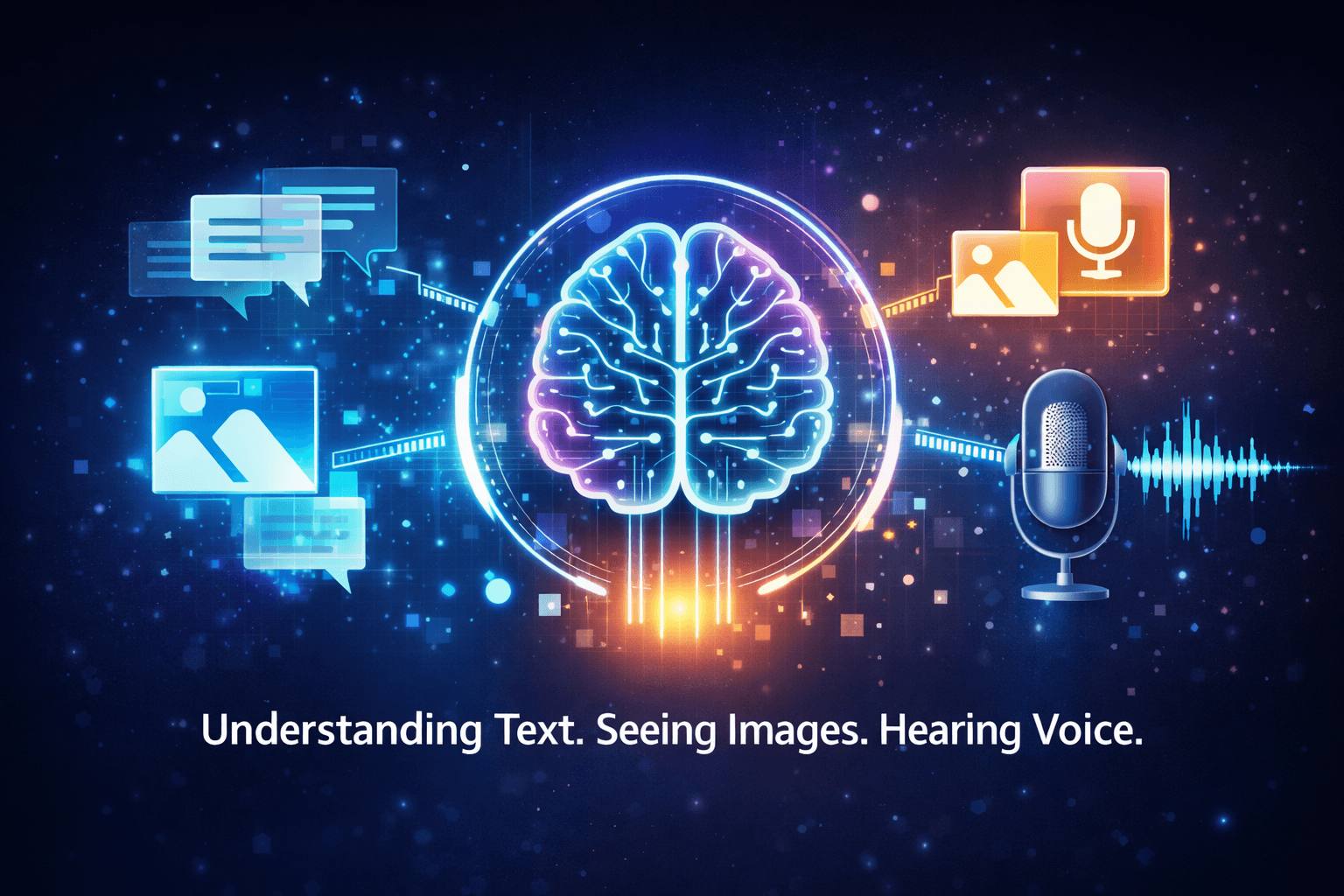
- Text
- Images
- Voice
- Video
- Structured data
Unlike traditional AI models that specialize in one input type, multimodal systems integrate multiple signals to deliver richer, more human-like interactions.
For example:
- A user uploads a product image and asks, “Is this available in blue?”
- The AI analyzes the image, identifies the product, checks inventory data, and responds via voice or text.
This seamless interaction is transforming digital experiences.
How Text, Image & Voice Models Work Together
Modern multimodal systems combine technologies such as:
- Large Language Models (LLMs)
- Computer Vision models
- Speech Recognition systems
- Text-to-Speech engines
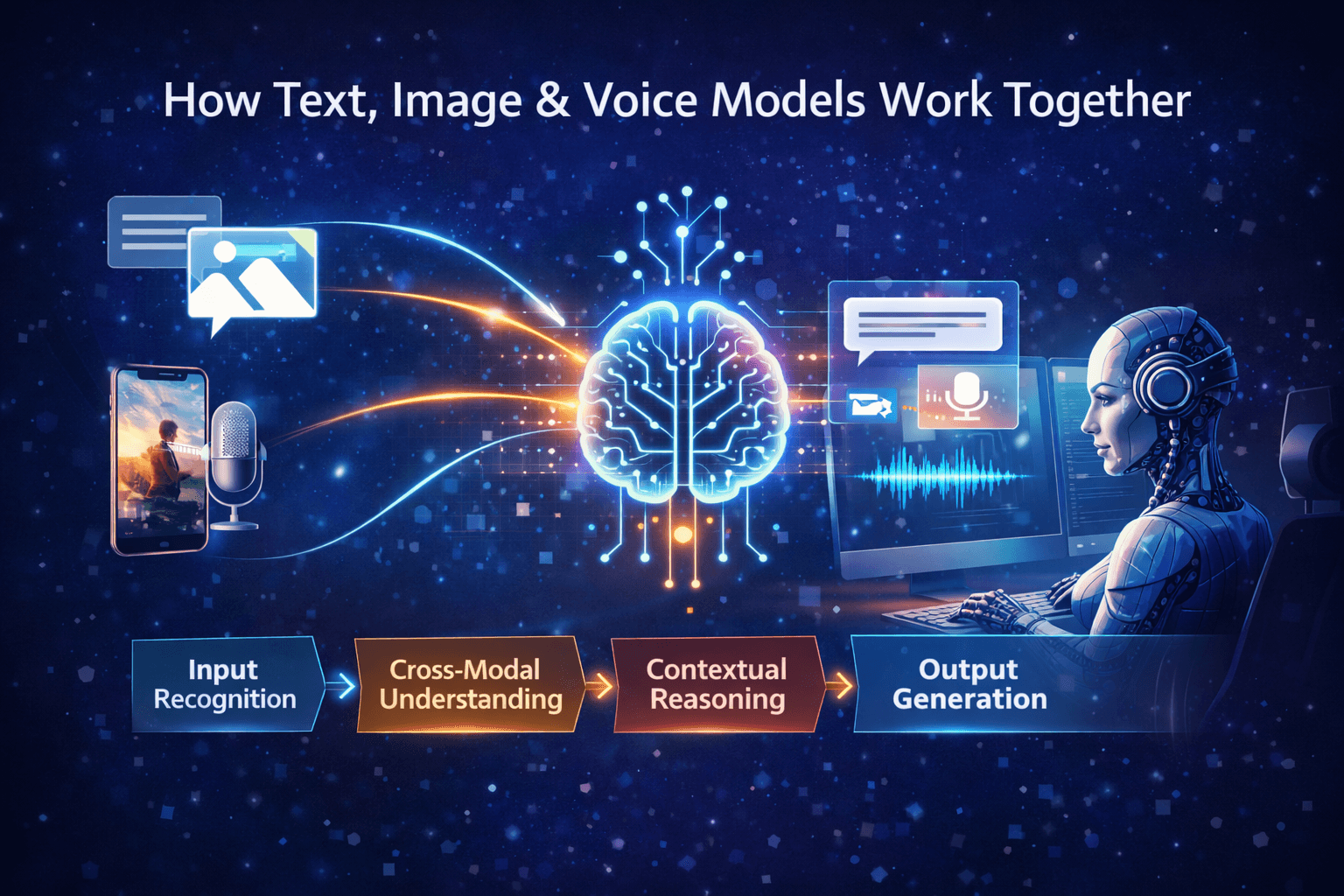
Together, they create an intelligent loop:
- Input Recognition – Accepts text, voice, or image.
- Cross-Modal Understanding – Connects visual, textual, and auditory context.
- Contextual Reasoning – Processes intent and meaning.
- Output Generation – Responds in the most natural format (text, voice, or visual output).
This integrated approach enhances user satisfaction by reducing friction and increasing clarity.
How Multimodal AI Is Transforming User Experience
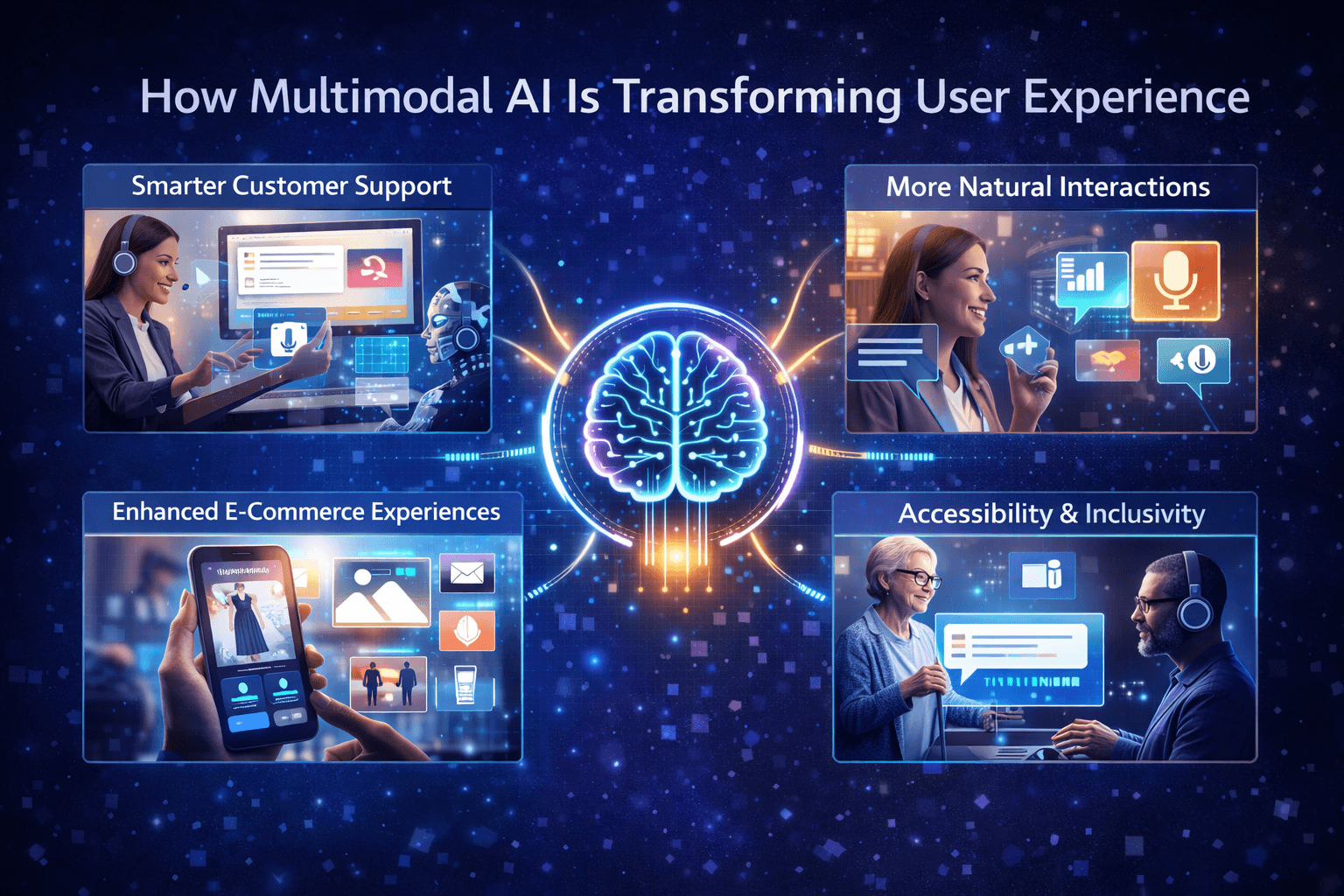
Smarter Customer Support
Instead of typing long explanations, users can:
- Upload screenshots of errors
- Send voice messages
- Share product photos
AI analyzes the content and provides accurate responses instantly.
This reduces resolution time and increases engagement.
More Natural Interactions
Voice-enabled AI combined with contextual understanding allows conversations to feel human-like.
Users can:
- Ask follow-up questions
- Switch between voice and text
- Share visual references
The experience feels seamless rather than robotic.
Enhanced E-Commerce Experiences
Customers can:
- Upload a picture of a dress and find similar items
- Ask voice-based queries
- Get visual product comparisons
This improves product discovery and boosts conversions.
Accessibility & Inclusivity
Multimodal AI makes digital platforms more accessible:
- Voice for visually impaired users
- Image-based inputs for language barriers
- Text-to-speech for reading assistance
Inclusive UX is no longer optional — it’s essential.
Real-World Adoption
Leading AI innovators are integrating multimodal capabilities into their platforms:
- OpenAI
- Google DeepMind
- Meta
These organizations are building systems that can interpret and generate across multiple formats, pushing businesses toward fully immersive AI-powered experiences.
Business Benefits of Multimodal AI
Implementing multimodal AI offers several advantages:
Higher Engagement
- Users interact in the way most comfortable to them.
Faster Problem Resolution
- Images + voice reduce back-and-forth clarification.
Better Personalization
- AI understands deeper context from multiple signals.
Increased Conversion Rates
- Enhanced discovery and intelligent recommendations.
Challenges to Consider
While powerful, multimodal AI comes with challenges:
- Data privacy concerns
- Higher infrastructure costs
- Complex model training
- Cross-modal accuracy issues
Businesses must invest in responsible AI governance and secure data handling practices.
The Future of Multimodal AI
The next evolution includes:
- Real-time video understanding
- Emotion-aware voice analysis
- AI-powered digital avatars
- Immersive AR/VR AI interactions
Soon, interacting with AI will feel less like using software and more like communicating with an intelligent assistant.
Multimodal systems will become the default expectation for modern digital platforms.
Why Multimodal AI Matters for Businesses in 2026
User expectations are evolving rapidly. Customers no longer want rigid interfaces. They expect flexibility, speed, and personalization.
Businesses that adopt multimodal AI will:
- Deliver frictionless customer journeys
- Increase customer satisfaction
- Gain a competitive advantage
- Future-proof their digital strategy
The companies that embrace multimodal intelligence today will lead tomorrow’s user experience revolution.
Final Thoughts
Multimodal AI is not just an upgrade — it’s a transformation in how humans interact with technology.
By combining text, image, and voice understanding into one unified system, businesses can create smarter, more intuitive, and more engaging experiences.
The future of UX is multimodal — and it’s already here.
Ready to Build Multimodal AI Experiences with Cognyx?
At Cognyx, we help businesses design and deploy intelligent AI solutions that combine text, image, and voice capabilities into seamless user experiences.
Whether you want to:
- Build AI-powered customer support
- Launch multimodal chat and voice assistants
- Integrate computer vision into your platform
- Create next-gen AI-driven products
Our team can help you transform your vision into scalable AI solutions.
👉 Start Your Multimodal AI Journey Today
Contact Cognyx to explore custom AI solutions tailored for your business.
Written by
