The Rise of the T-Shaped Developer in an AI-First World
Artificial intelligence is rapidly transforming the software development landscape. Tasks that once required hours of manual coding can now be accelerated with AI-powered tools. As this shift continues, the profile of the modern developer is also evolving.
In this new era, the concept of the T-shaped developer is becoming more relevant than ever. Instead of focusing solely on deep expertise in a single technology, developers are increasingly expected to combine specialized depth with broad interdisciplinary knowledge.
As AI becomes a central part of the development workflow, T-shaped skills are quietly becoming the blueprint for the future of software engineering.
The Changing Role of Developers in the AI Era
Over the past few years, AI-powered coding assistants have dramatically changed how developers write software. Tools like ChatGPT and GitHub Copilot can now generate code, explain complex logic, and even help debug applications.
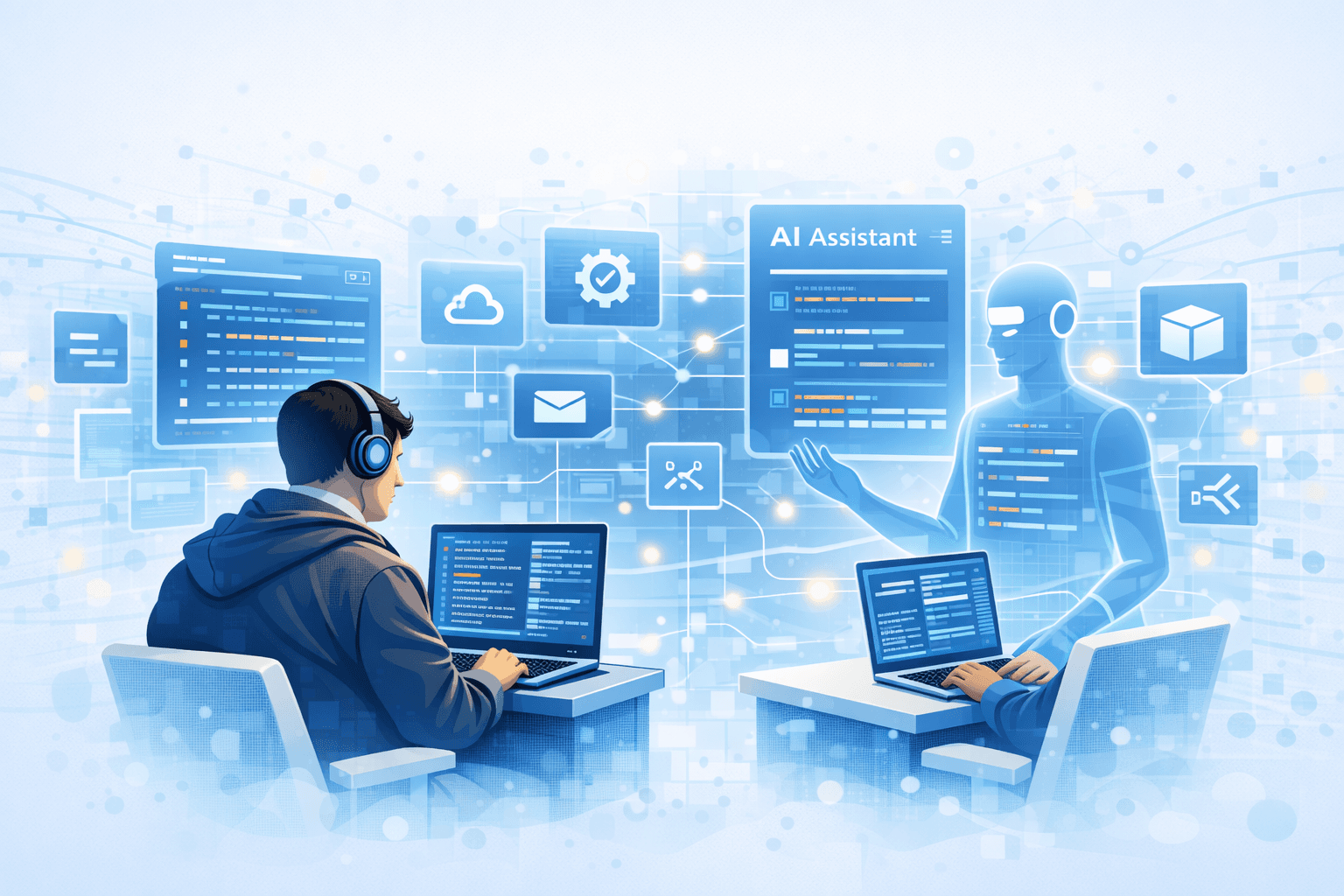
Instead of replacing developers, these tools are reshaping their responsibilities. Developers are spending less time writing repetitive code and more time focusing on:
- System architecture
- Problem solving
- Product thinking
- Integrating AI-powered services
As automation handles routine tasks, developers who understand multiple aspects of the development lifecycle gain a significant advantage.
What Is a T-Shaped Developer?
The concept of a T-shaped professional describes someone who has both depth and breadth in their skillset.
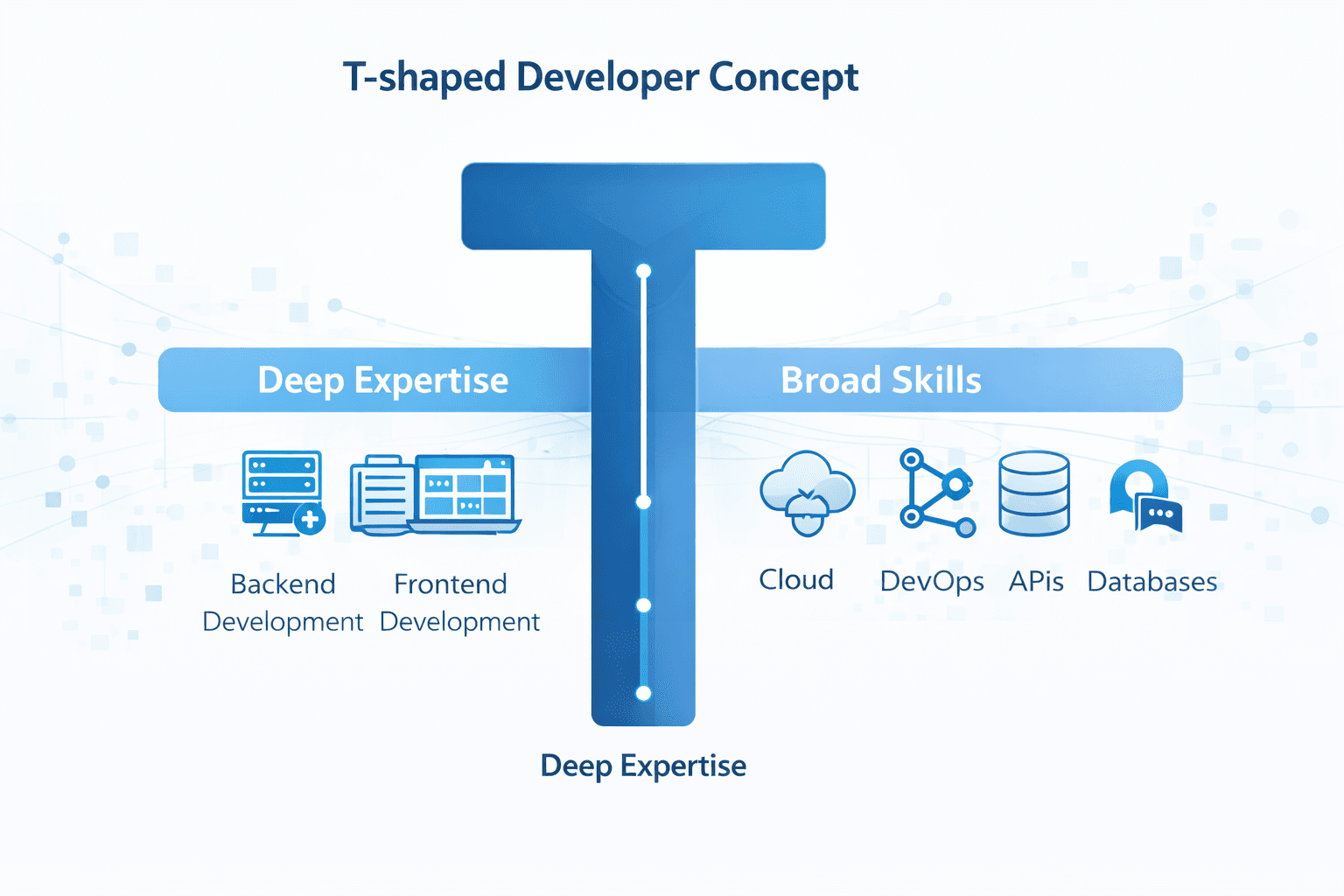
The vertical bar of the “T” represents deep expertise in a specific area, while the horizontal bar represents a broad understanding across multiple domains.
For developers, this might look like:
Depth (Specialization)
- Backend engineering
- Frontend development
- Machine learning
- Mobile development
Breadth (Supporting Skills)
- Cloud infrastructure
- DevOps and CI/CD
- Databases and system design
- API integrations
- Product and business understanding
This combination allows developers to collaborate more effectively across teams while still maintaining strong technical expertise.
Why AI Is Accelerating the T-Shaped Trend
AI tools are lowering the barrier to entry for many technical tasks. Code generation, documentation, and debugging are becoming increasingly automated.
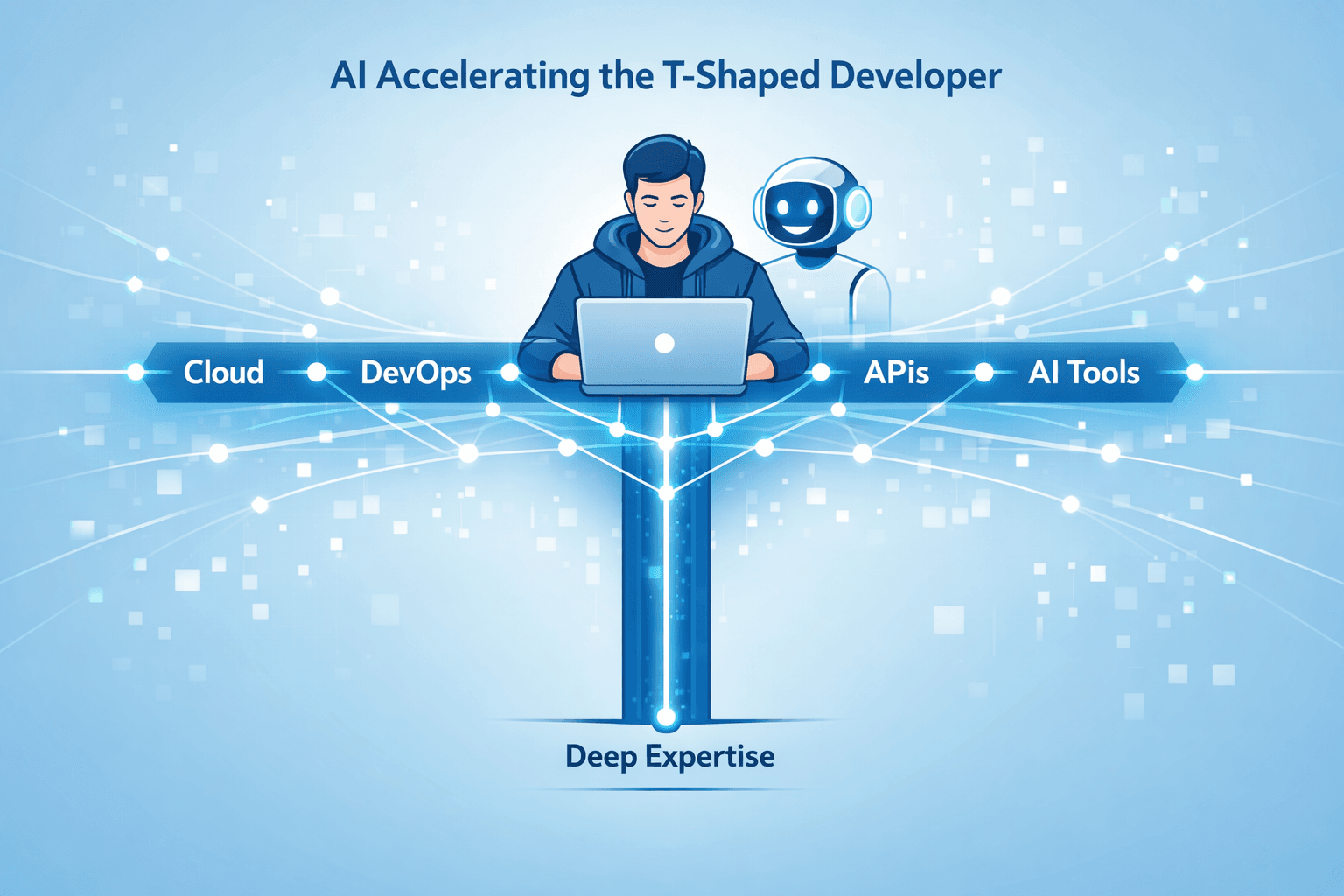
Companies like OpenAI are pushing the boundaries of what AI can do in software development, enabling developers to build complex systems faster than ever before.
Because of this, developers are shifting their focus from writing every line of code to understanding how systems work together.
In an AI-first development environment, the most valuable developers are those who can:
- Connect different technologies
- Design scalable architectures
- Integrate AI models into applications
- Understand both technical and product requirements
These capabilities align perfectly with the T-shaped developer model.
The Skills of a Modern T-Shaped Developer
To thrive in the AI-first era, developers are expanding their skill sets beyond a single programming language or framework.
Some of the most valuable skills include:
Technical Depth
A strong specialization remains essential. Developers should still aim to master at least one core area such as backend development, frontend engineering, or machine learning.
System Thinking
Understanding how services, databases, APIs, and cloud infrastructure work together is becoming increasingly important.
AI and Automation Awareness
Developers should learn how to effectively use tools like GitHub Copilot and ChatGPT to accelerate their workflows.
Cross-Team Collaboration
Modern development requires close collaboration between engineers, product managers, designers, and data scientists.
Continuous Learning
The technology landscape evolves quickly, and T-shaped developers are comfortable exploring new tools and domains.
How Developers Can Become T-Shaped
Becoming a T-shaped developer does not mean trying to learn everything at once. Instead, it involves building strategic breadth while maintaining deep expertise.
Here are a few practical steps developers can take:
1. Strengthen your core specialization
Master one domain such as backend development, frontend engineering, or AI.
2. Explore adjacent skills
If you are a backend developer, learn basic DevOps, cloud infrastructure, and API design.
3. Use AI tools effectively
Leverage AI coding assistants to improve productivity and learn faster.
4. Understand the full product lifecycle
Go beyond coding and learn about product design, scalability, and user experience.
5. Stay curious
The best developers constantly explore new technologies and ideas.
The Future of AI-Augmented Developers
The rise of AI will not eliminate the need for developers, but it will redefine what it means to be a great engineer.
In the future, developers will act more like system architects, problem solvers, and technology strategists rather than just code writers.
Organizations are already prioritizing engineers who can bridge multiple disciplines and adapt to new tools quickly. As AI continues to evolve, the demand for T-shaped developers will likely grow even stronger.
Conclusion
The rise of AI is transforming the software development landscape, and the concept of the T-shaped developer is becoming increasingly important in this new environment. Developers who combine deep technical expertise with broad interdisciplinary knowledge will be best positioned to succeed in the AI-first era.
With powerful tools, platforms, and AI-driven solutions emerging every day, developers now have unprecedented opportunities to build smarter systems and create innovative products. Platforms like Cognyx are helping make this transition easier by enabling developers to integrate AI more effectively into their workflows.
As the industry continues to evolve, one thing is clear: the future belongs to developers who can adapt, learn continuously, and embrace the possibilities of AI-powered development.
Written by
